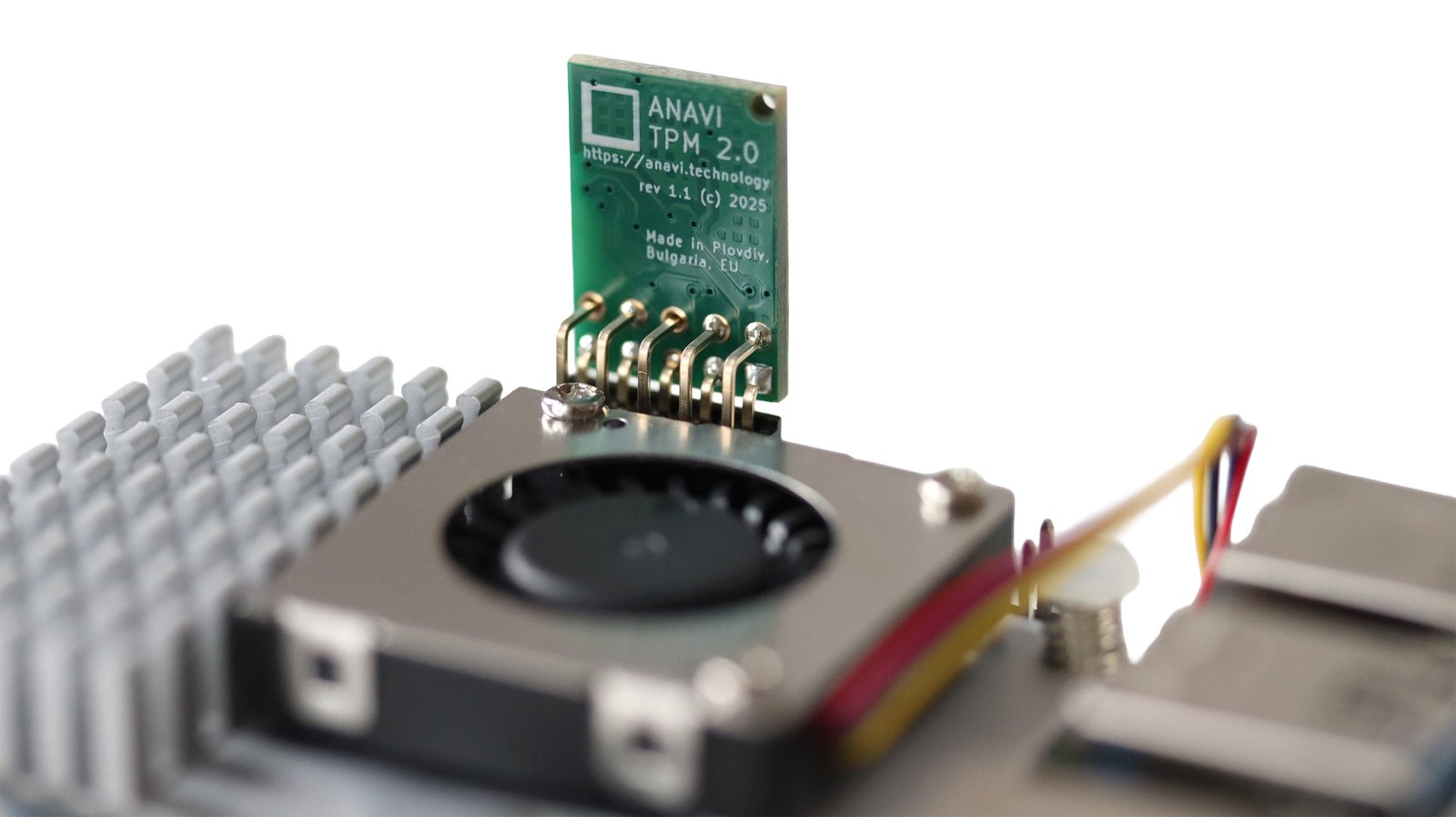
When most makers start a Raspberry Pi project, security isn't usually the first thing on their minds. Getting the hardware working, writing the software, and connecting everything together tends to take priority. It's only later, after the project is connected to a network or deployed in the real world, that questions about encryption, credentials, and secure storage start to appear.
Unfortunately, software alone can't solve every security problem.
That's where trusted platform modules, or TPMs, come into play. These dedicated security chips are commonly found in laptops, desktops, servers, and industrial equipment, where they help protect sensitive information from theft or tampering. Now ANAVI Technology wants to bring those same capabilities to Raspberry Pi and other single-board computers.
Adding a Security Chip
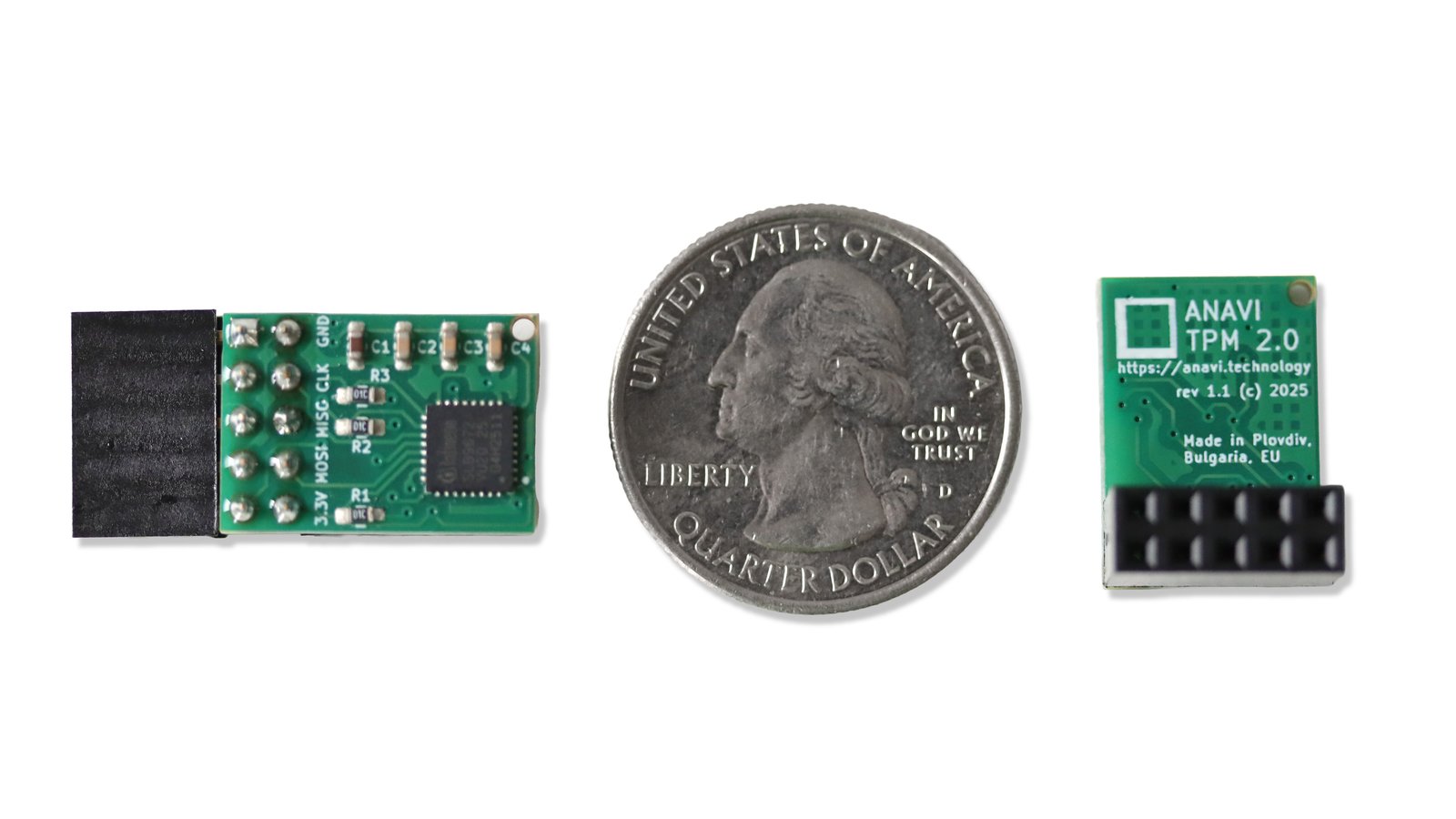
The ANAVI TPM 2.0 for Raspberry Pi is a small add-on board designed around Infineon's SLB9672 TPM 2.0 security chip. The board connects to the Raspberry Pi through its GPIO header and provides a dedicated hardware device for storing cryptographic keys, certificates, passwords, and other sensitive information.
Unlike software-based key storage, a TPM is specifically designed to resist unauthorized access. Private keys can be generated and stored inside the chip itself, reducing the risk that credentials could be extracted if the operating system becomes compromised.
The board supports Raspberry Pi computers as well as other Linux-based single-board computers that provide compatible interfaces and software support.
Why Use a TPM?
Many common security tasks rely on protecting secret information. Secure boot systems need trusted keys. VPN connections depend on certificates. Encrypted storage requires cryptographic material that must be protected from attackers.
Storing those secrets in normal files works, but it also creates opportunities for them to be copied or stolen.
A TPM addresses that problem by isolating sensitive operations inside dedicated hardware. Applications can request cryptographic functions without necessarily exposing the underlying keys themselves.
For makers building home automation systems, industrial monitoring equipment, edge computing devices, or IoT products, that additional layer of protection can be valuable.
Open Hardware and Open Software
Like ANAVI's previous projects, the board follows an open-source hardware philosophy. Hardware design files, documentation, and software resources are being made available to the community, allowing users to understand exactly how the device works and adapt it for their own projects.
The board is also designed to work with existing TPM software stacks available for Linux. This means developers can take advantage of established tools and libraries rather than learning an entirely new ecosystem.
Installation is relatively straightforward. The module connects through the Raspberry Pi's GPIO header and communicates over SPI, making it accessible even for users with limited hardware experience.
A Useful Upgrade for Connected Projects
Security hardware isn't as exciting as a new robot, display, or AI accelerator. It's easy to overlook because, when everything is working properly, you rarely notice it's there.
But as more Raspberry Pi projects move beyond the workbench and into homes, offices, and industrial environments, security becomes increasingly important. Features such as encrypted storage, secure authentication, and trusted boot processes are no longer limited to enterprise hardware.
The ANAVI TPM 2.0 won't change what your Raspberry Pi can do, but it can help protect what your Raspberry Pi knows. For projects that handle sensitive information or operate in connected environments, that's a capability worth having — and you can have it for about $20.