The Raspberry Pi Has an IoT Problem
The Raspberry Pi is one of the most popular development platforms ever created. It powers everything from media centers and retro gaming consoles to robots and home automation systems. Yet anyone who has tried deploying a Raspberry Pi outside the safety of a workbench quickly discovers a problem.
Development boards make great prototypes. Production hardware is a different story.
A few jumper wires, a breakout board, and a plastic enclosure might be enough to test an idea, but once that project needs to survive in a factory, greenhouse, workshop, or remote installation, things get considerably more complicated.
That's the challenge the Edgeberry project aims to solve.
More Than Just a Carrier Board
Created as an open-source ecosystem for Raspberry Pi-based IoT devices, Edgeberry combines hardware, software, and mechanical design into a platform intended to simplify the path from prototype to deployment.
The system revolves around several core components.
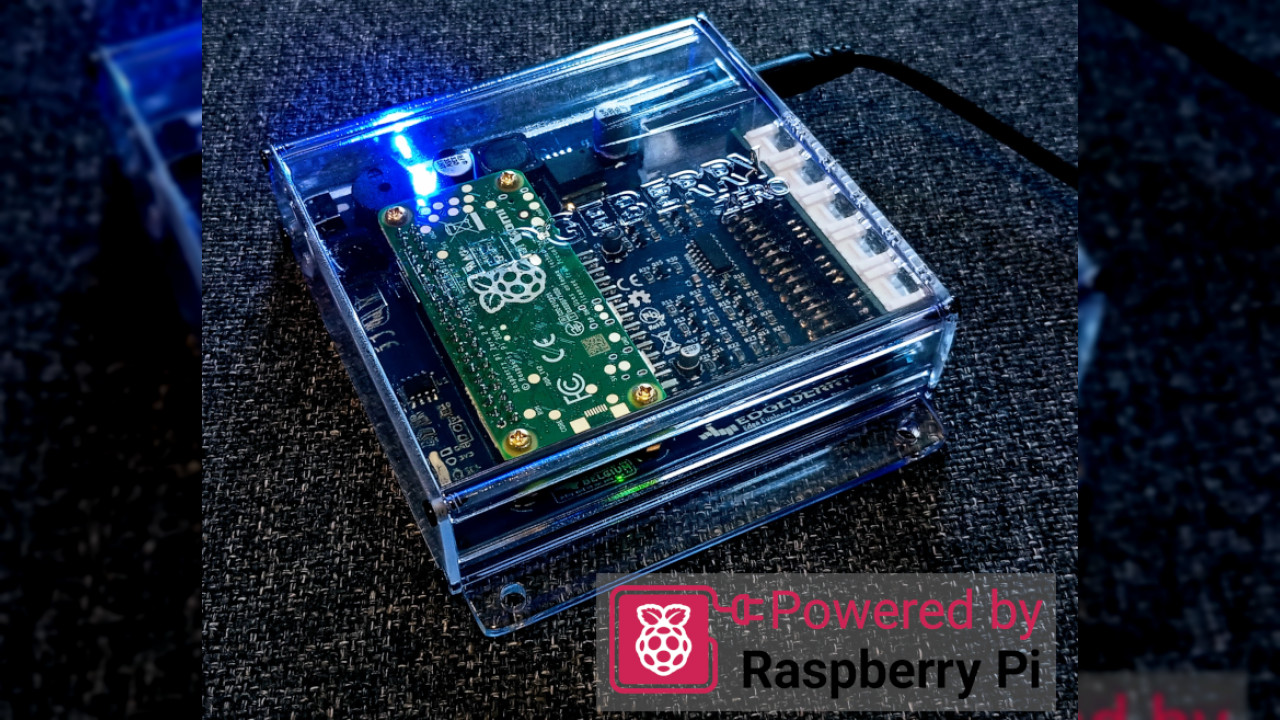
At the center is the Edgeberry Baseboard, which provides power management, status indicators, device identification hardware, and interfaces for expansion modules. Application-specific functionality is added through plug-in Hardware Cartridges, while a 3D-printable enclosure provides physical protection for installations that need to operate outside a lab environment.
There's also the Edgeberry Device Hub, a companion platform intended to manage communication between deployed devices and cloud-based applications.
Taken together, the project attempts to provide many of the pieces that developers often end up creating themselves after a prototype starts growing into something larger.
Built for the Physical World
One of the more interesting aspects of the project is its focus on deployment rather than development.
The creator describes Edgeberry as a response to years spent building Raspberry Pi-based systems for real-world environments. While Linux-based single-board computers provide tremendous flexibility, they often require additional work before they can be trusted in field installations.
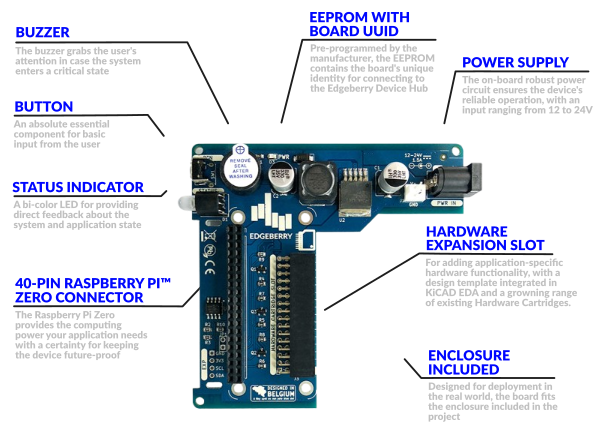
The Edgeberry Zero board addresses some of those concerns by incorporating hardware features that many connected devices eventually need anyway. A power subsystem, status LED, button, buzzer, and EEPROM-based device identity are all included as part of the platform. Software libraries expose these functions through a common interface, reducing the amount of repetitive infrastructure code developers need to write.
The enclosure design follows a similar philosophy. Rather than leaving builders to design their own housings from scratch, Edgeberry provides FreeCAD models that can be modified, branded, and 3D printed as needed. Hardware cartridges can also be developed using provided KiCad templates, allowing application-specific electronics to slide directly into the system.
Open Source All the Way Down
Many IoT platforms promise flexibility while quietly placing key features behind subscriptions, proprietary cloud services, or closed development tools.
Edgeberry takes a different route.
The hardware designs, firmware, software, and mechanical files are all released under open-source licenses. The project uses familiar tools such as Raspberry Pi OS, KiCad, FreeCAD, and GNU/Linux, making it easier for developers to inspect, modify, and extend every layer of the platform.
That openness also means the project can continue evolving regardless of what happens to any individual company or product line.
Bridging Prototype and Product
There are already countless ways to connect a Raspberry Pi to sensors and cloud services. Edgeberry isn't trying to reinvent those fundamentals.
Instead, it focuses on the less glamorous parts of product development: power systems, enclosures, device identity, deployment, and management. Those details rarely make headlines, but they often determine whether a prototype remains a prototype or becomes something that can survive in the real world.
For developers building connected devices, Edgeberry offers an interesting attempt to package those lessons into a reusable platform rather than forcing every project to start from scratch.