How Much Flight Data Can You Fit in 5 Grams?
Model rocketry has no shortage of flight computers, altimeters, and telemetry systems. The challenge is finding one that's small enough for lightweight rockets without draining your bank account.
Bud Bennett's latest project tackles that problem with an inexpensive flight recorder designed to fit entirely inside a rocket's payload section. Despite weighing only about 5 grams with its battery and enclosure, the device can record altitude, acceleration, rotation, temperature, and flight timing data throughout a launch and recovery.
The project is currently being developed as both a hardware platform and a companion application for analyzing recorded flights.
Built for Life Inside a Rocket
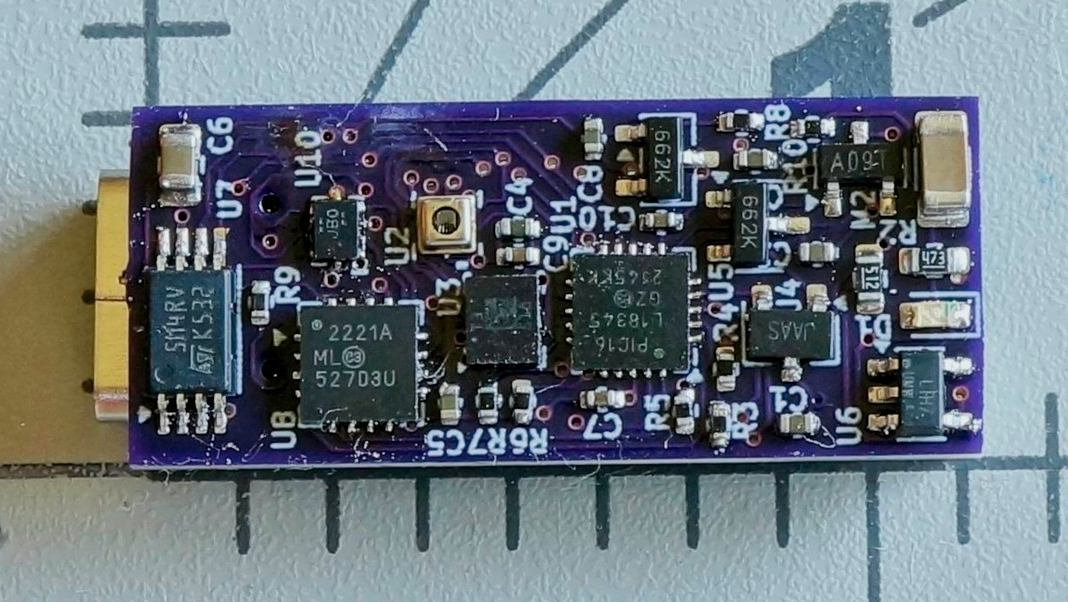
The payload uses a BMP384, BMP388, BMP390, or LPS22HB pressure sensor to track altitude and an LSM6DSO32 IMU to record acceleration and rotational movement during flight. Data is stored in onboard EEPROM and later transferred to a computer or smartphone for analysis.
A small 40 mAh lithium-polymer battery powers the system. According to Bennett, the payload can be armed without opening the rocket by placing a magnet near the airframe. A Hall-effect sensor detects the magnetic field, confirms arming with an audible alert, and prepares the recorder for launch.
Once armed, the firmware automatically determines the rocket's launch axis. Liftoff is detected when acceleration exceeds a user-defined threshold along that axis.
Recording the Entire Flight
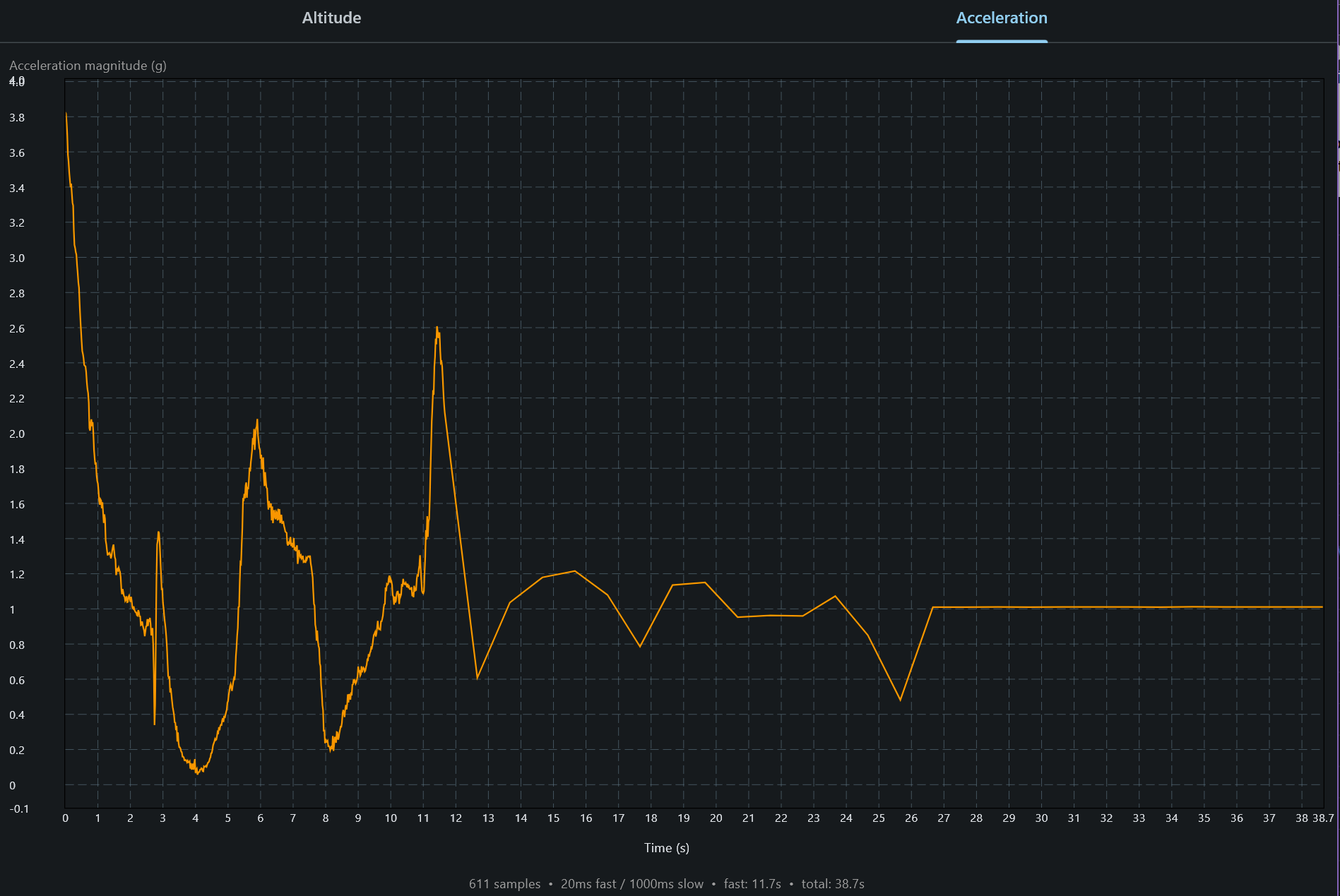
During ascent, the sensors can sample at rates up to 50 Hz. The system records detailed telemetry through powered flight, coast, and apogee before switching to a slower one-second sampling interval during descent. Landing is detected when altitude remains unchanged for several seconds.
The standard version includes 512 KB of EEPROM storage and records a single flight. A planned Pro version expands storage to 4 MB and can retain multiple flights before older records begin to be overwritten.
Beyond raw sensor data, the software calculates metrics such as maximum altitude, peak acceleration, burn duration, time to apogee, recovery duration, and total flight time.
From Prototype to Field Use
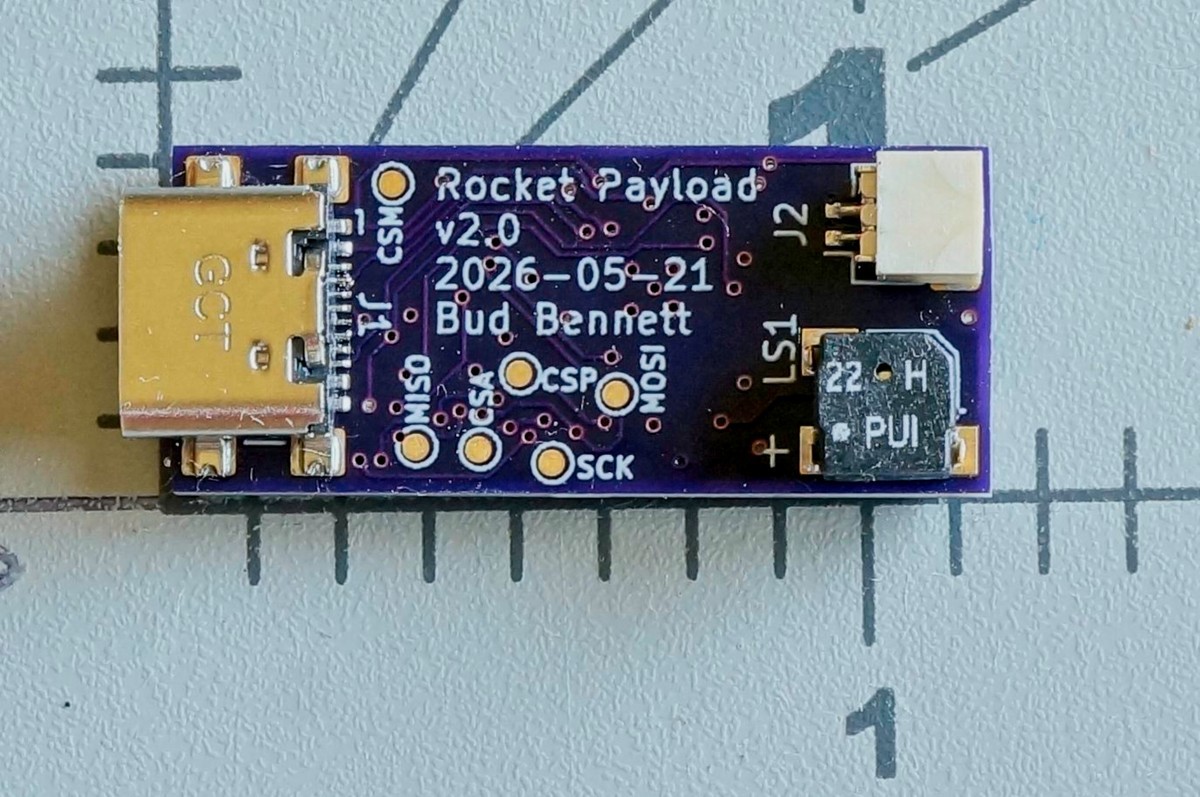
The project has gone through several hardware revisions. Early prototypes relied on an external USB-to-UART adapter for data downloads, but later versions integrate a USB interface directly onto the board. That change eliminates custom cables and additional adapters, making it easier to retrieve flight data after recovery.
Bennett also moved from a two-layer PCB to a four-layer design while maintaining nearly the same physical dimensions. The latest boards measure roughly 12.5 mm by 30 mm and include onboard charging circuitry, battery monitoring, and support for larger memory devices.
More Than Just Hardware
An interesting aspect of the project is the companion software. Flight data can be downloaded, plotted, exported to CSV files, and compared against previous launches. Native applications have already been developed for Windows, Android, Ubuntu Linux, and Raspberry Pi OS, with additional platform support planned.
While commercial flight recorders are readily available, many focus on a narrow set of measurements or require proprietary software. Bennett's design takes a broader approach by combining multiple sensors, onboard storage, cross-platform software, and an unusually small form factor.
For model rocket enthusiasts who enjoy analyzing every stage of a flight, this little payload packs a lot of capability into a very small space.